Provenance:
Zimmerman Family Collection
Published:
Pratapaditya Pal, “The Zimmerman Collection of Nepali Art,” Arts of Asia, September-October 1974
Pratapaditya Pal, Art of the Himalayas: Treasures from Nepal and Tibet, American Federation of Arts exhibition catalogue, 1991, no. 12
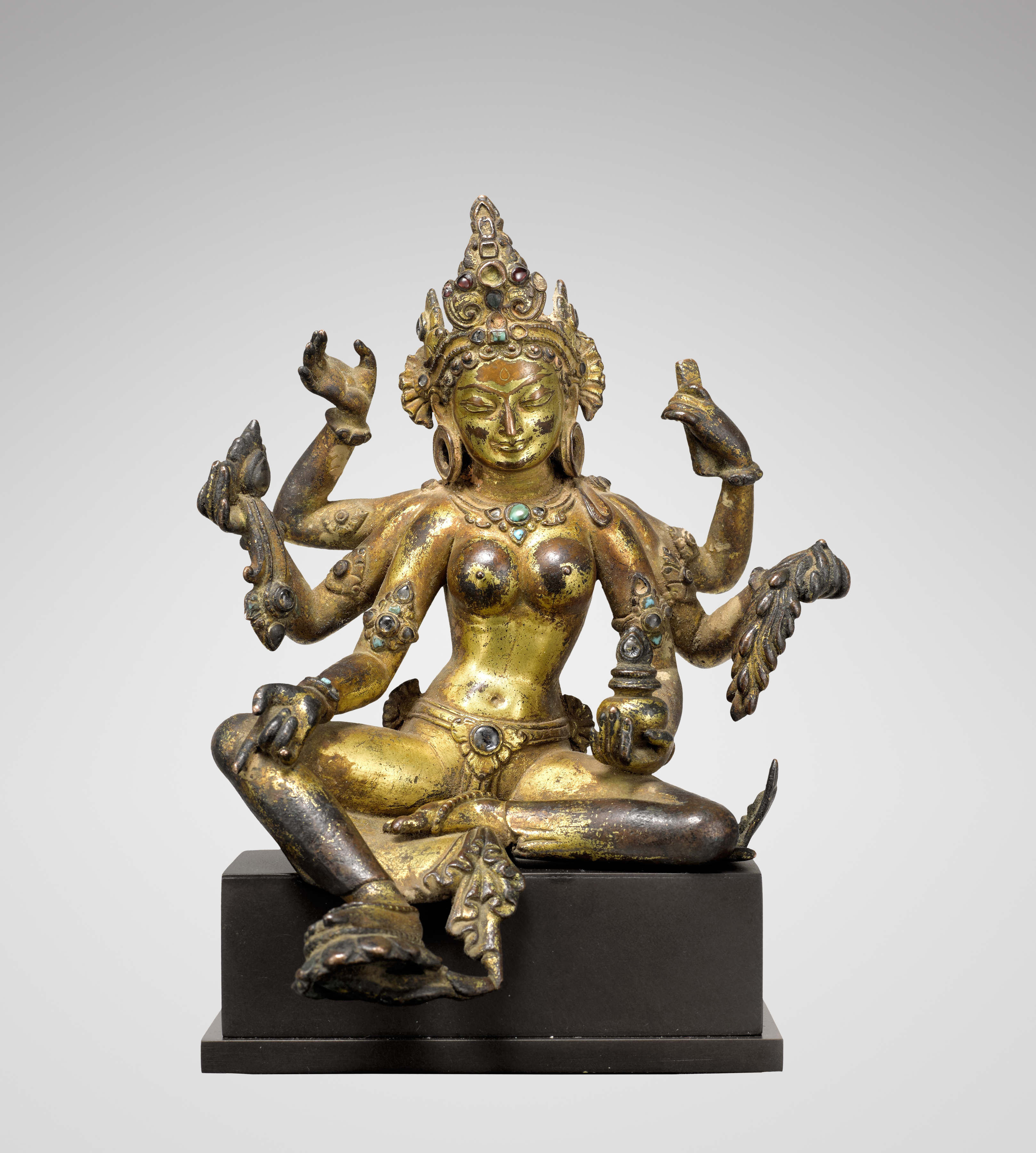
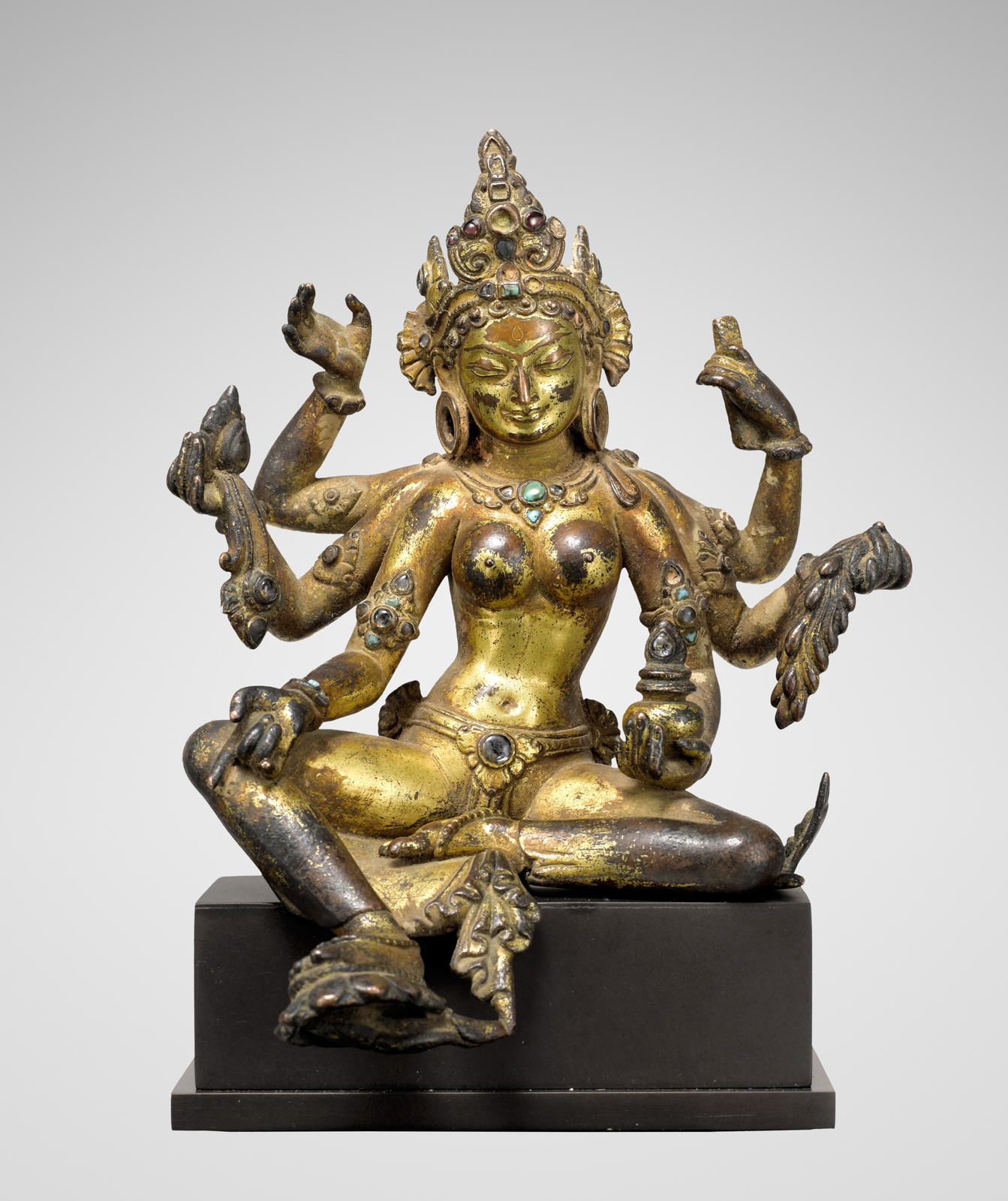
This luminous gilt-copper alloy image of Vasudhara, the Buddhist goddess of wealth, fertility, and spiritual abundance, embodies the refined elegance and devotional intimacy characteristic of medieval Nepalese sculpture. Greatly revered in the Nepalese Buddhist tradition, the goddess Vasudhara provides both spiritual and material prosperity. Seated in lalitasana and displaying boons of fertility, sustenance, wealth, and wisdom are represented in her hands with a water pot, sheaf of grain, strand of jewels, and the Prajnaparamita Sutra, respectively. Vasudhara's body, opulently adorned with jewelry, signifies her bodhisattva status—a conduit being traversing between her earthly existence and celestial body for the benefit of mankind. A principal deity that arose in tandem with the formation of Buddhist cults in Nepal, Vasudhara holds harmony in her aureole of arms and a warm expression of empathy and generosity.
The figure exemplifies the extraordinary achievements of Newar metalworkers during the Licchavi and early Malla periods, when Nepal emerged as a major artistic center of the Himalayan world. Drawing upon Indian Pala prototypes while cultivating a distinctive local aesthetic, Newar artists developed a sculptural idiom marked by supple naturalism, elaborate ornamentation, and technical virtuosity in lost-wax casting. The present image reflects this synthesis through its elegant proportions, fluid contours, and meticulous surface detail. The restrained dynamism of the pose, together with the radiant gilded finish, suggests a work created not merely for visual admiration, but for sustained ritual engagement, in which divine presence and material form converge.